
How to Choose the Right Size Wall Art for Every Room
Choosing wall art is not only about finding a painting you love. Size matters just as much as color, style, and subject.
A beautiful painting can look surprisingly small when placed on a large empty wall. On the other hand, artwork that is too large can make a small room feel crowded.
This is why understanding wall art size is one of the most important steps when decorating your home.
Whether you are choosing a painting for a living room sofa, bedroom wall, dining room, entryway console, or hallway, the right proportions can make the entire space feel more balanced and professionally designed.
The good news is that you do not need to be an interior designer to choose the right size.
A few simple rules can help you determine how large your artwork should be.
Quick Answer: What Size Wall Art Should I Buy?
As a general rule, wall art should usually occupy around two-thirds to three-quarters of the width of the furniture beneath it.
For example, if your sofa is 84 inches wide, artwork around 56–63 inches wide will usually create a balanced relationship.
For large blank walls without furniture, choose artwork based on the overall wall dimensions rather than using a small decorative piece.
The most important factors are:
- Wall width
- Wall height
- Furniture width
- Ceiling height
- Room size
- Artwork orientation
- Visual weight
- Distance from surrounding objects
When in doubt, slightly larger artwork usually looks better than artwork that is too small.
1. Why Wall Art Size Matters
The size of artwork changes how a room feels.
A small painting can create an intimate, delicate feeling. A large painting can become a dramatic focal point.
However, artwork needs to relate to its surroundings.
Imagine a large sectional sofa with a tiny 20-inch painting above it. Even if the painting itself is beautiful, the wall will still look unfinished.
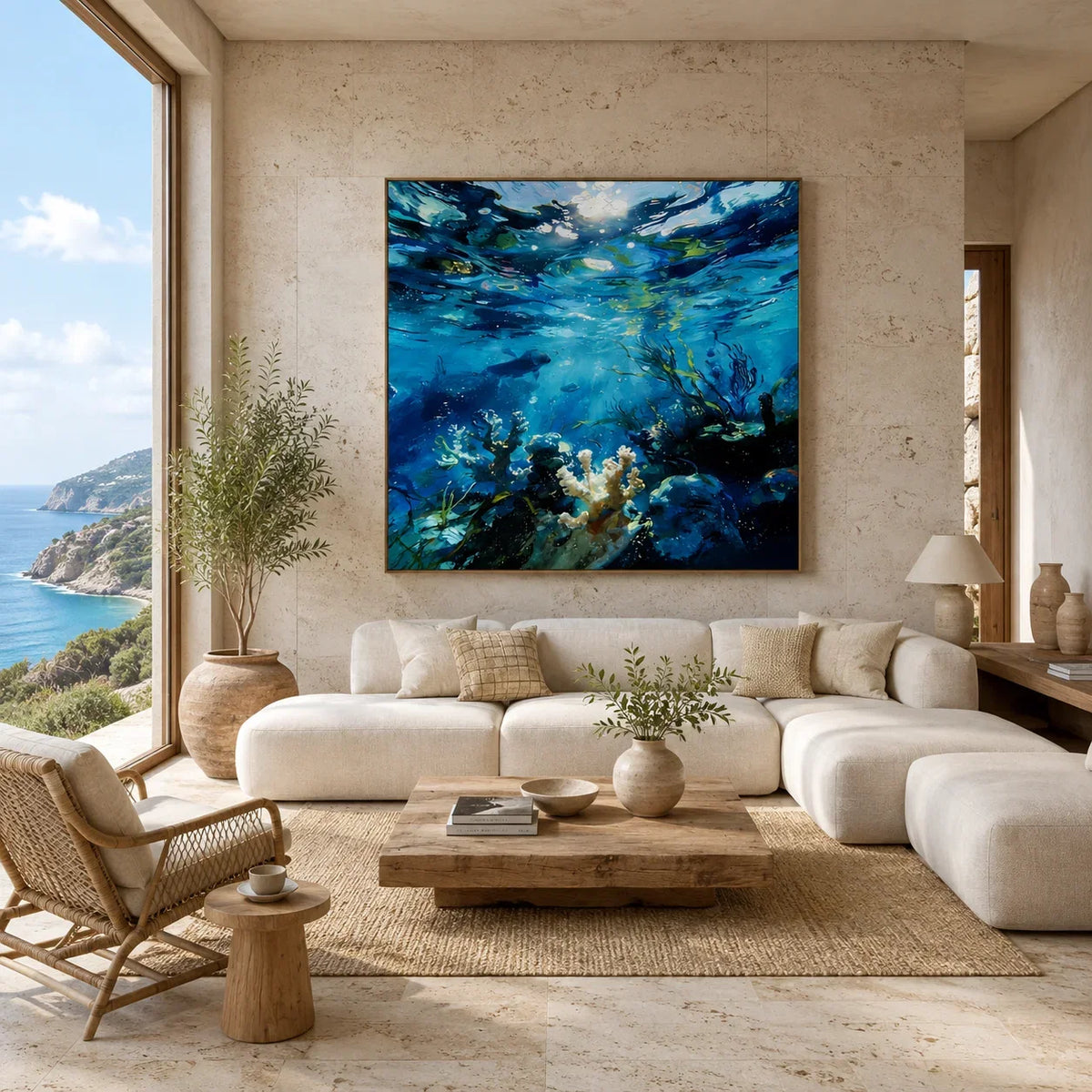
Now imagine the same sofa with an oversized painting that spans most of its width. Suddenly, the furniture and artwork feel connected.
This relationship is called visual proportion.
Good wall decor is not simply about filling empty space. It is about creating relationships between:
wall + furniture + artwork + surrounding objects.
2. The Two-Thirds Rule for Wall Art
One of the easiest rules to remember is the two-thirds rule.
When artwork hangs above furniture, aim for the artwork to be approximately two-thirds to three-quarters of the furniture width.
For example:
| Furniture Width | Recommended Artwork Width |
|---|---|
| 36 inches | 24–27 inches |
| 48 inches | 32–36 inches |
| 60 inches | 40–45 inches |
| 72 inches | 48–54 inches |
| 84 inches | 56–63 inches |
| 96 inches | 64–72 inches |
| 108 inches | 72–81 inches |
These are guidelines rather than strict rules.
A particularly dramatic interior can use larger artwork, while a minimalist space may intentionally use a smaller piece.
The important thing is that the artwork should have enough visual weight to connect with the furniture.
3. How Big Should Wall Art Be Above a Sofa?
The sofa is one of the most common places to hang artwork.
For most living rooms, choose artwork that is approximately two-thirds to three-quarters of the sofa width.
For example:
72-inch sofa → approximately 48–54-inch artwork
84-inch sofa → approximately 56–63-inch artwork
96-inch sofa → approximately 64–72-inch artwork
If you want a more dramatic look, an oversized painting can extend closer to the full width of the sofa.
This is especially effective with large hand-painted oil paintings because the texture and visual depth allow the artwork to function as a major focal point.
What if I have a sectional?
Sectional sofas are visually larger, so a larger piece of artwork usually works better.
For an L-shaped sectional, consider:
- One oversized horizontal painting
- One large square painting
- A coordinated pair
- A large abstract canvas
Avoid placing a tiny painting in the center of a large sectional unless you are intentionally creating a minimalist look.
4. How Big Should a Painting Be Above a Bed?
Bedroom artwork should relate to the width of the headboard rather than simply the width of the wall.
A useful guideline is:
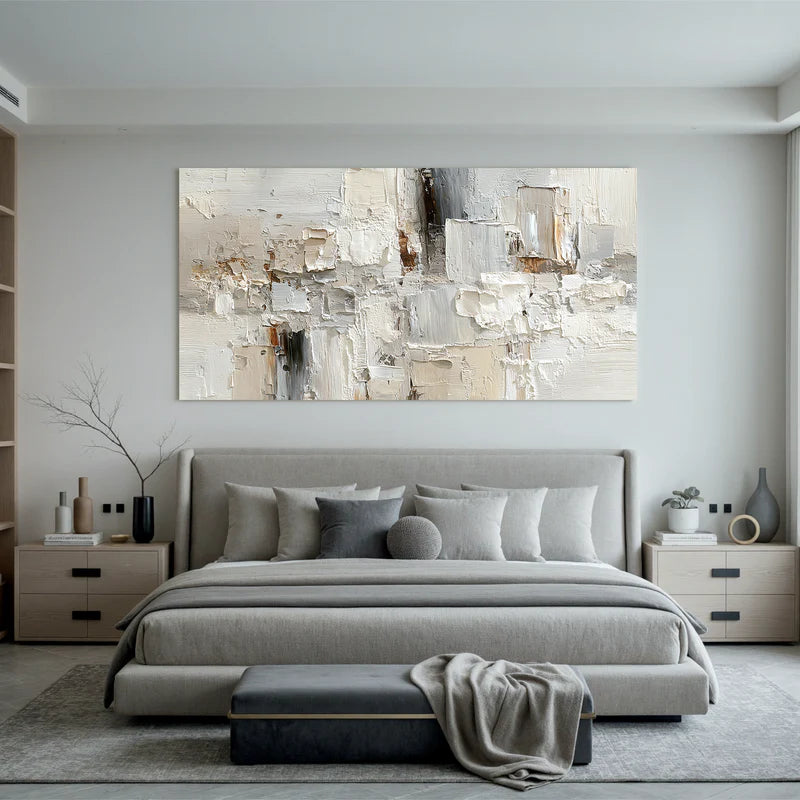
Artwork width ≈ 60–75% of the headboard width.
For example:
A 72-inch headboard could work well with artwork around 43–54 inches wide.
A 60-inch headboard could work with artwork around 36–45 inches wide.
For a king-size bed, large artwork often looks particularly effective because the bed itself creates a strong horizontal visual line.
You can use:
- One large horizontal painting
- One oversized square painting
- Two coordinated vertical paintings
- A wide textured canvas
For bedrooms, softer colors and organic compositions often create a more relaxing atmosphere.
5. What Size Art Should Go Above a Console Table?
Entryway and living room console tables are another common location for wall art.
The same two-thirds rule works well here.
If your console is 60 inches wide, artwork around 40–45 inches wide will usually feel balanced.
For a narrow console, vertical artwork can also work beautifully.
This is especially useful in:
- Small entryways
- Narrow foyers
- Hallways
- Apartment entrances
- Staircase landings
A tall vertical painting can visually emphasize ceiling height and make a narrow space feel more substantial.
6. What Size Wall Art Works Best on a Large Blank Wall?
Large blank walls are where many homeowners make their biggest decorating mistake.
They often choose artwork based on the painting itself rather than the wall.
The result is a small painting floating in a huge empty space.
For a large blank wall, consider:
Option 1: One Oversized Painting
This is often the cleanest solution.
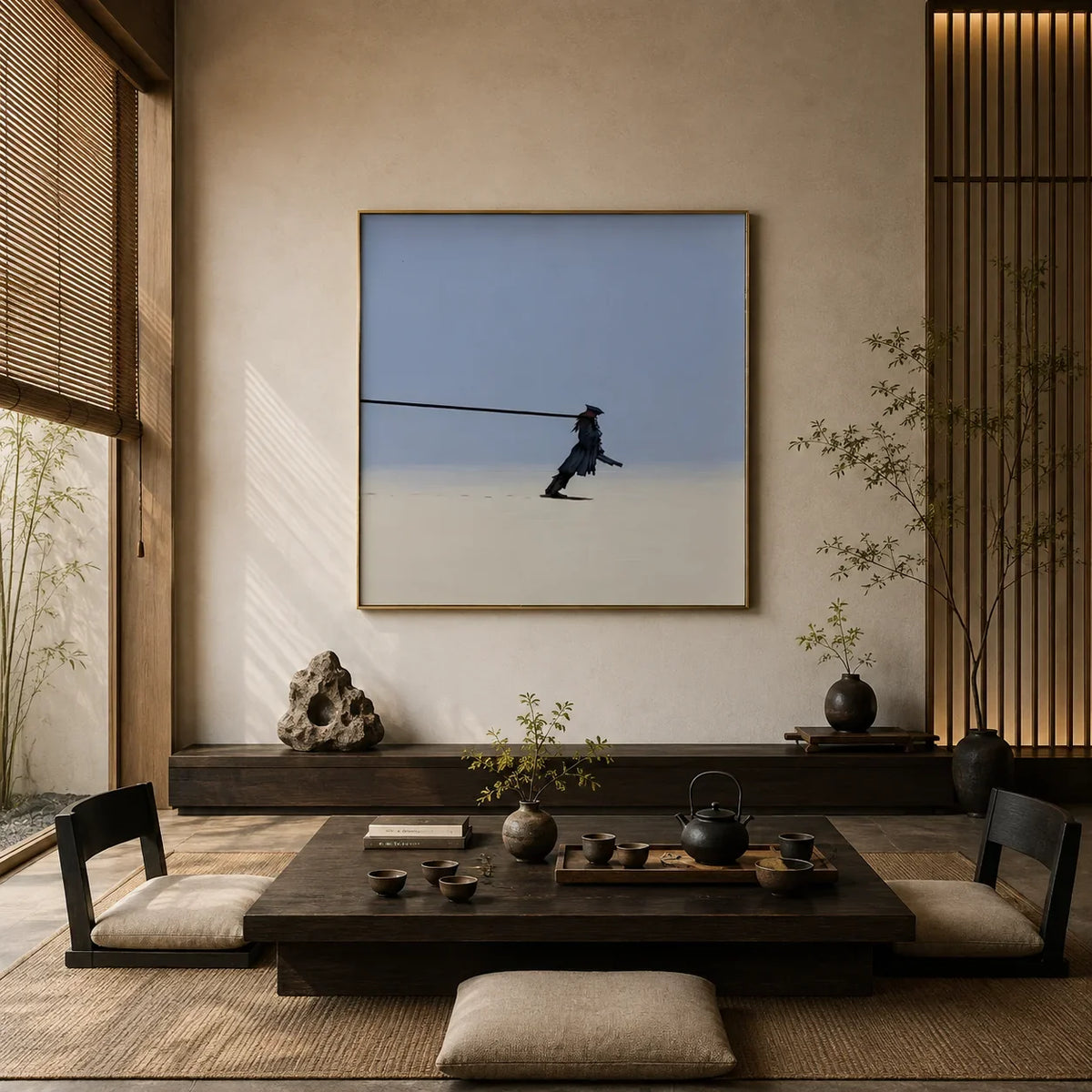
A large hand-painted oil painting can become the architectural focal point of the room.
Option 2: Large Diptych
Two coordinated paintings create width while maintaining visual balance.
Option 3: Gallery Wall
Multiple smaller paintings can work when you want a collected, layered appearance.
Option 4: One Large Vertical Painting
Ideal for:
- High ceilings
- Staircase walls
- Tall entryways
- Narrow vertical spaces
If the wall is very large, do not automatically assume that multiple small artworks are necessary.
Sometimes one powerful oversized painting looks more luxurious.
7. Oversized Wall Art vs Small Wall Art
Which one should you choose?
It depends on the room.
Choose oversized wall art when:
- The wall is large
- Furniture is substantial
- You want a focal point
- The room has high ceilings
- You prefer a luxury interior
- The furniture arrangement is simple
Choose smaller artwork when:
- The room is small
- The furniture is delicate
- You want a layered gallery look
- The wall already contains several decorative elements
- You prefer a minimalist composition
In modern interiors, oversized wall art is particularly effective because it creates impact without requiring many decorative objects.
8. Horizontal vs Vertical Wall Art
Artwork orientation should follow the architecture of the space.
Horizontal Paintings
Horizontal paintings are ideal for:
- Above sofas
- Above beds
- Dining rooms
- Sideboards
- Wide walls
- Large living rooms
They emphasize width and work naturally with long furniture.
Vertical Paintings
Vertical paintings are ideal for:
- Entryways
- Hallways
- Staircases
- Narrow walls
- Tall rooms
- Console tables
- Bedroom side walls
They draw the eye upward and can make a room feel taller.
Choosing the correct orientation can be just as important as choosing the correct size.
9. How High Should You Hang Wall Art?
Artwork should generally be positioned at a comfortable viewing height.
For artwork above furniture, avoid leaving a large empty gap between the furniture and the painting.
A common guideline is to leave approximately:
6–10 inches between furniture and artwork.
For example, if you have a sofa or console table beneath the painting, the artwork should feel visually connected to the furniture.
Hanging it too high can make the painting appear disconnected from the room.
However, ceiling height and furniture proportions can change the ideal placement.
The most important rule is:
The artwork should feel connected to the furniture below it.
10. How to Choose Art Size for a Small Room
Small rooms do not necessarily require tiny artwork.
In fact, one larger painting can sometimes make a small room feel more sophisticated than several small pieces.
For a small living room, consider:
- One medium-to-large painting
- One vertical statement piece
- A simple abstract painting
- Neutral textured wall art
Avoid filling every wall.
One carefully chosen focal point often works better.
For a small bedroom, a medium-sized painting above the bed can create balance without overwhelming the room.
11. How to Choose Art Size for a Large Room
Large rooms usually need artwork with enough visual weight.
A common mistake is using small artwork simply because the painting itself is attractive.
Large spaces can support:
- Oversized abstract paintings
- Large landscapes
- Large floral paintings
- Large textured oil paintings
- Statement figure paintings
- Multi-panel artwork
A large painting can visually anchor the room.
This is particularly useful in open-concept homes where the artwork helps define different zones.
12. Consider the Visual Weight of the Painting
Size is not the only factor.
Two paintings with exactly the same dimensions can have completely different visual weight.
A painting with:
- Dark colors
- Strong contrast
- Thick texture
- Dense composition
will usually feel heavier than a light, neutral painting.
A pale beige abstract painting may need to be larger to have the same visual impact as a dark, high-contrast painting.
This is why choosing artwork should not be based on dimensions alone.
Consider:
size + color + texture + composition + furniture.
13. Why Large Hand-Painted Oil Paintings Work So Well
Large hand-painted oil paintings can make an especially strong impact because they combine scale with physical texture.
A large canvas already creates visual presence.
When you add:
- Thick brushstrokes
- Layered oil paint
- Raised texture
- Natural color variation
- Handmade details
the painting becomes a major design element.
This works particularly well in:
- Luxury living rooms
- Large bedrooms
- Dining rooms
- High-ceiling foyers
- Modern designer homes
- Boutique-style interiors
Instead of adding many decorative objects, one large painting can provide the room with color, texture, and personality.
14. How to Choose the Right Size for Different Rooms
Here is a simple starting point:
| Room | Recommended Approach |
|---|---|
| Living Room | ⅔–¾ sofa width |
| Bedroom | 60–75% of headboard width |
| Dining Room | ⅔–¾ sideboard width |
| Entryway | ⅔–¾ console width |
| Hallway | Vertical or end-wall statement piece |
| Large Blank Wall | Oversized artwork or multiple pieces |
| Small Room | One medium/large focal piece |
| High Ceiling | Larger vertical artwork |
Remember that these are starting points rather than strict measurements.
15. How to Make Large Wall Art Look More Expensive
The artwork itself is important, but presentation also matters.
To make large wall art look more refined:
Choose the right frame
Dark wood, walnut, black, or simple gallery-style frames work well in modern interiors.
Give the painting breathing room
Do not surround it with too many decorative objects.
Use good lighting
Picture lights, wall sconces, or warm ambient lighting can emphasize texture.
Match the surrounding materials
Pair artwork with:
- Wood
- Linen
- Stone
- Ceramic
- Wool
- Brass
- Natural fibers
This creates a cohesive visual language.
16. Common Wall Art Sizing Mistakes
Buying Artwork That Is Too Small
This is probably the most common mistake.
A small painting can get visually lost on a large wall.
Hanging Artwork Too High
A large gap between furniture and artwork can make the room feel disconnected.
Ignoring Furniture Width
Artwork should relate to the furniture underneath it.
Using Too Many Small Pieces
Multiple small paintings can sometimes create visual clutter.
Ignoring Ceiling Height
A tall room may need vertical artwork with enough height to balance the architecture.
Choosing Based Only on the Painting
Always consider the room where the artwork will actually live.
FAQ: Wall Art Size
What is the best size for wall art?
There is no single perfect size. As a general rule, artwork above furniture should be around two-thirds to three-quarters of the furniture width.
How big should art be above a sofa?
A painting approximately ⅔–¾ the width of the sofa usually creates a balanced look.
What size painting should go above a king-size bed?
A large painting around 60–75% of the headboard width is a useful starting point.
Should wall art be bigger than furniture?
Usually, artwork should not be dramatically wider than the furniture below it. However, oversized artwork can work intentionally in large rooms.
Is large wall art better than small wall art?
Not necessarily. Large artwork works well for large walls and substantial furniture, while smaller artwork can be better for compact spaces and layered arrangements.
Should wall art be centered over furniture?
Usually yes. Centering the artwork with the furniture creates visual balance and makes the room feel more intentional.
How high should artwork be above a sofa?
A gap of roughly 6–10 inches between the sofa and the artwork is a useful starting point, although the ideal distance depends on the furniture and painting dimensions.
Final Thoughts
Choosing the right size wall art can completely change the appearance of a room.
The most important thing is not to choose artwork based on the painting alone. Consider the relationship between the wall, furniture, ceiling height, artwork orientation, color, and visual weight.
When the proportions are right, even a simple room can feel more polished and intentional.
For large spaces, an oversized hand-painted oil painting can become a powerful focal point. For smaller rooms, a carefully scaled medium-sized painting can add personality without overwhelming the space.
At Ownanart, our collection of 100% hand-painted oil paintings includes different orientations, styles, colors, and sizes designed for modern interiors.
Whether you are decorating a living room, bedroom, dining room, entryway, or hallway, choosing the right artwork size is the first step toward creating a wall that feels balanced, beautiful, and truly finished.
The right painting does not simply fit your wall.
It completes the room.