Wall Art Size Guide: How to Choose the Right Hand-Painted Oil Painting for Your Space
Choosing the right artwork is not only about color, style, or subject. Size is just as important.
A beautiful hand-painted oil painting can lose its impact if it is too small for the wall. On the other hand, a well-sized painting can instantly make a room feel more balanced, more intentional, and more luxurious.
Many people decorate a room with carefully chosen furniture, lighting, rugs, and accessories, but still feel that something is missing. Often, the reason is simple: the wall art is not the right size.
In this wall art size guide, we will explain how to choose the right painting size for different spaces, including living rooms, bedrooms, dining rooms, entryways, offices, and large blank walls. Whether you are looking for oversized canvas wall art, textured abstract paintings, or a statement oil painting above the sofa, these tips will help you create a more polished interior.
Why Wall Art Size Matters
Wall art has a strong visual role in interior design. It helps connect the wall with the furniture below it, creates a focal point, and gives the room structure.
If the artwork is too small, it may look disconnected from the furniture and make the wall feel unfinished. This is especially common above sofas, beds, dining cabinets, and fireplaces.
If the artwork is too large, it can overpower the furniture or make the space feel crowded. However, in most modern homes, people tend to choose artwork that is too small rather than too large.
For hand-painted oil paintings, size is especially important because texture and brushstrokes become more impressive at a larger scale. A large painting allows the viewer to appreciate the depth, movement, and handmade details more clearly.
The right size can make a painting feel like a true statement piece rather than simple decoration.
1. Wall Art Above the Sofa
The living room sofa wall is one of the most popular places for a large painting. It is also one of the easiest places to get the size wrong.
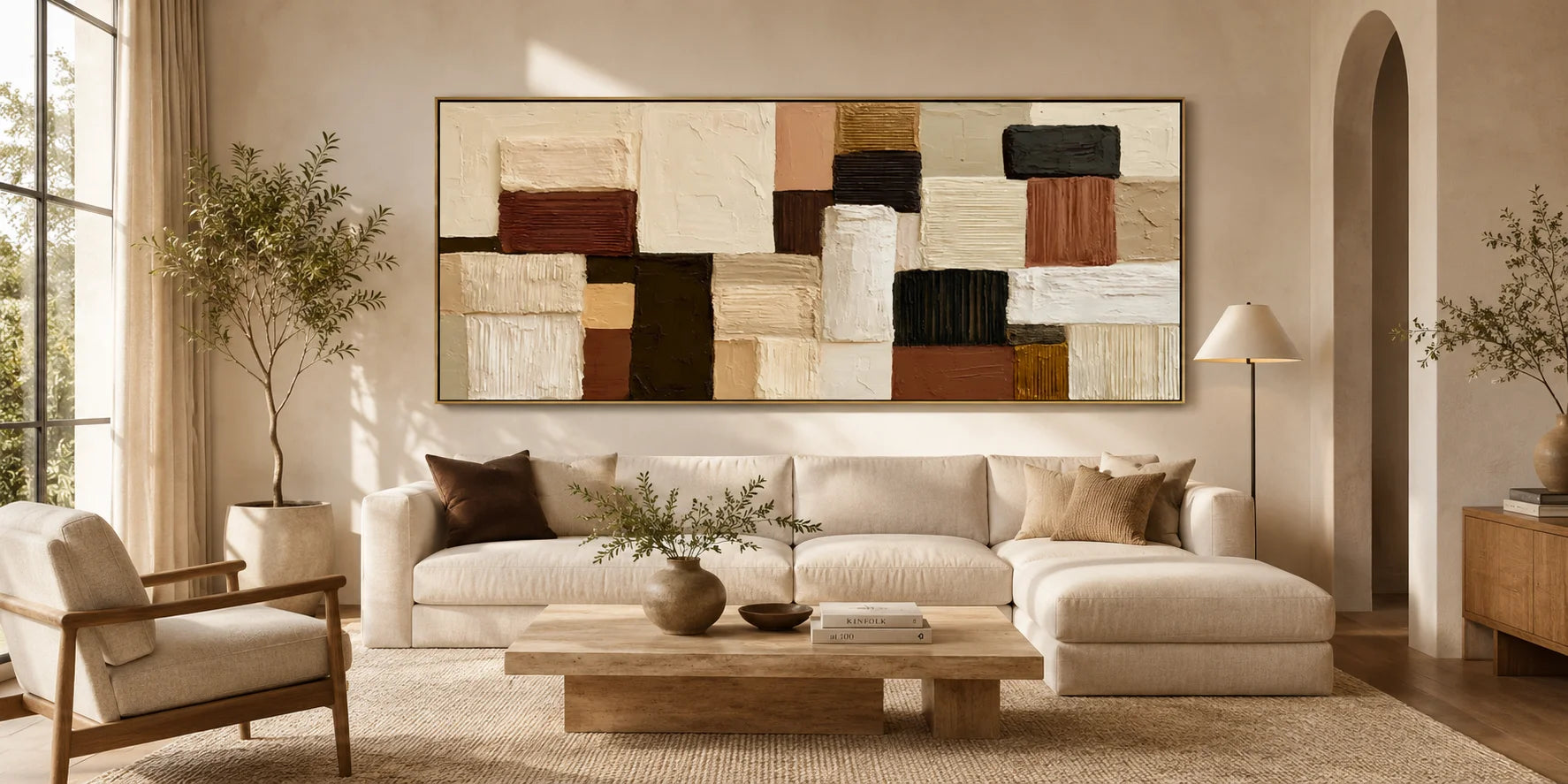
As a general rule, artwork above the sofa should be about two-thirds to three-quarters of the sofa width. This creates a balanced relationship between the painting and the furniture.
For example, if your sofa is 90 inches wide, a painting around 60 to 70 inches wide will usually look balanced. If the painting is much smaller, it may feel too weak for the wall.
For sofa walls, horizontal paintings usually work best. A wide canvas helps visually stretch the space and makes the seating area feel complete.
Best choices for above the sofa:
- Large horizontal oil paintings
- Oversized abstract canvas art
- Textured wall art
- Modern landscape paintings
- Neutral hand-painted artwork
- Contemporary figure paintings
A large hand-painted painting above the sofa can become the main focal point of the living room. It helps the space feel curated and finished.
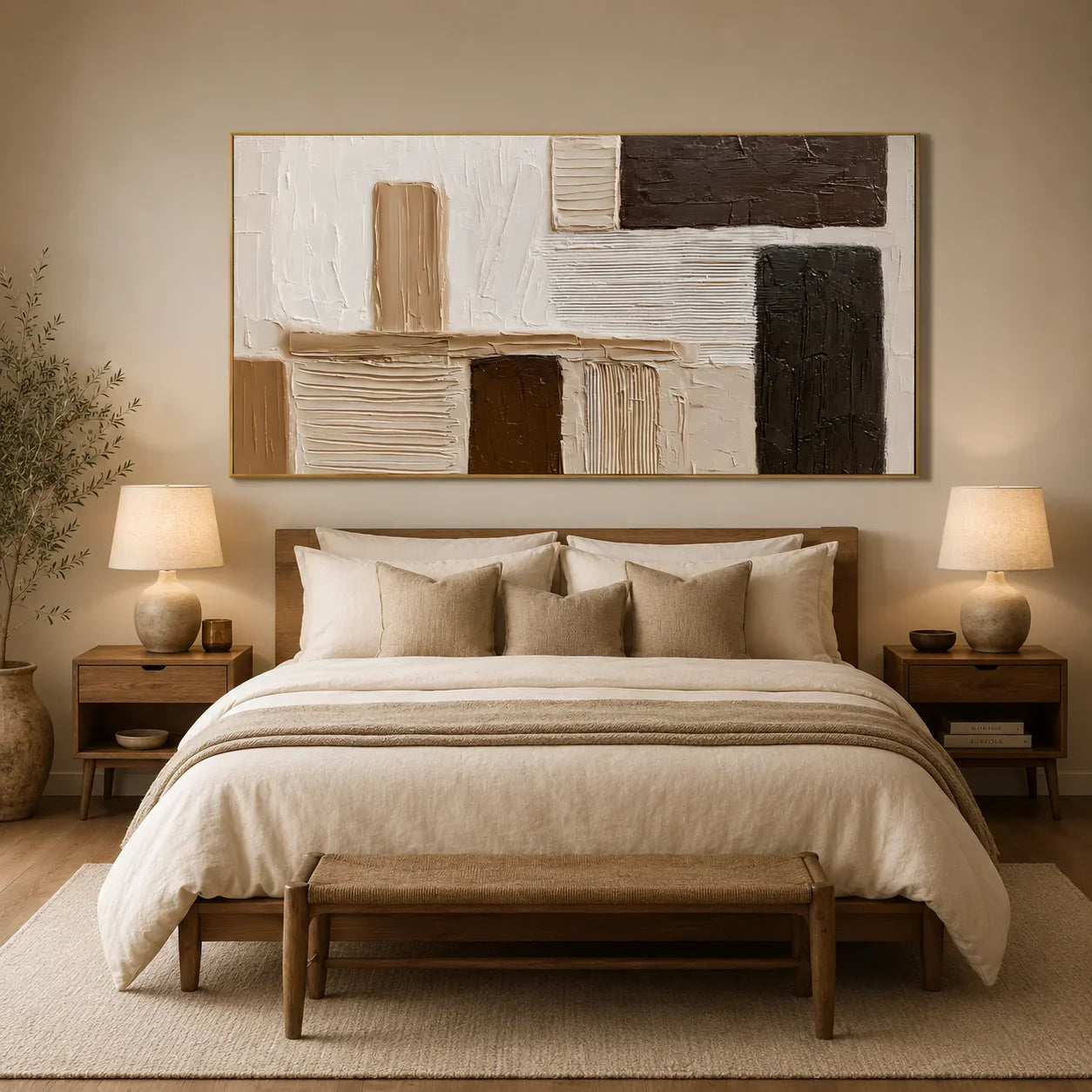
2. Wall Art Above the Bed
The bedroom is another important space where artwork size matters. A painting above the bed should feel calm, balanced, and connected to the bed frame.
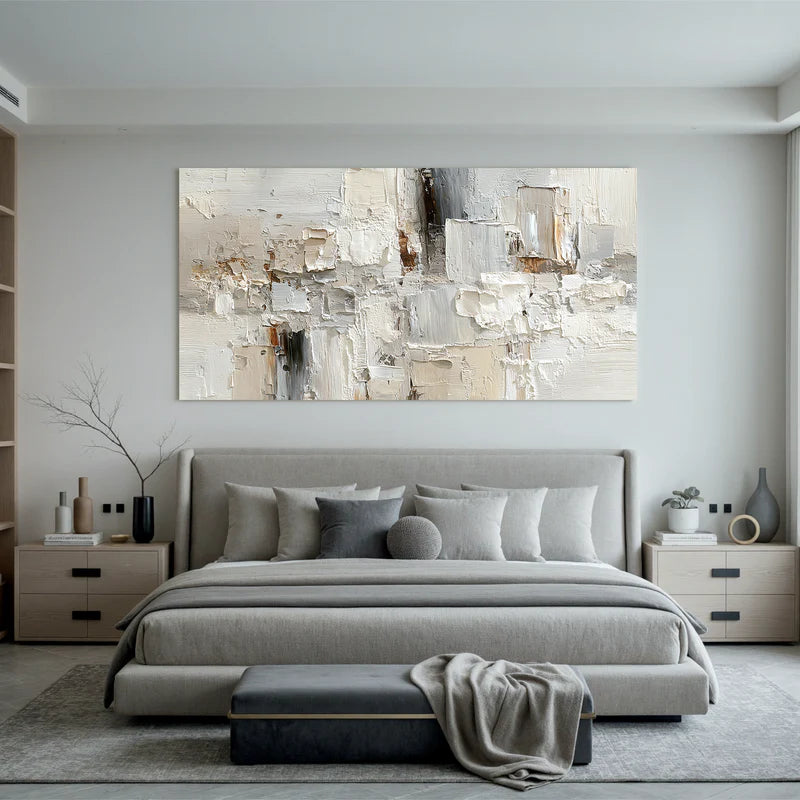
For most bedrooms, a horizontal painting works beautifully above the headboard. The width of the artwork should usually be around two-thirds of the bed width.
For a queen bed, a medium-to-large horizontal painting often works well. For a king bed, a larger canvas usually looks better because the bed itself has strong visual weight.
The painting should not be wider than the bed, unless you are intentionally creating a dramatic oversized look. In most cases, leaving some space on both sides of the artwork creates a cleaner and more elegant result.
Best bedroom artwork sizes are usually medium to large, not too small.
Good styles for bedroom wall art include:
- Soft abstract oil paintings
- Neutral textured canvas art
- Ocean-inspired paintings
- Gentle landscape paintings
- Floral hand-painted artwork
- Warm beige or cream artwork
In bedrooms, the goal is not only visual balance. The painting should also create a peaceful mood.
3. Wall Art Above a Dining Cabinet or Sideboard
Dining rooms often have large empty walls above sideboards, buffets, or dining cabinets. This is a perfect place for a hand-painted oil painting.
When placing art above a sideboard, the artwork should usually be narrower than the furniture below it. A painting that is around two-thirds to three-quarters of the cabinet width usually looks elegant.
For a long sideboard, a horizontal painting is often the best option. For a taller cabinet or smaller dining wall, a vertical painting can also work well.
Dining room artwork should feel warm and atmospheric. Since dining rooms are often used in the evening, textured oil paintings can look especially beautiful under warm lighting.
Good choices include:
- Warm abstract oil paintings
- Textured landscape paintings
- Floral oil paintings
- Neutral canvas art
- Earth-toned paintings
- Large horizontal wall art
A correctly sized painting can make the dining area feel more inviting and complete.
4. Wall Art for Entryways
The entryway creates the first impression of your home. Even a small entryway can feel more refined with the right artwork.
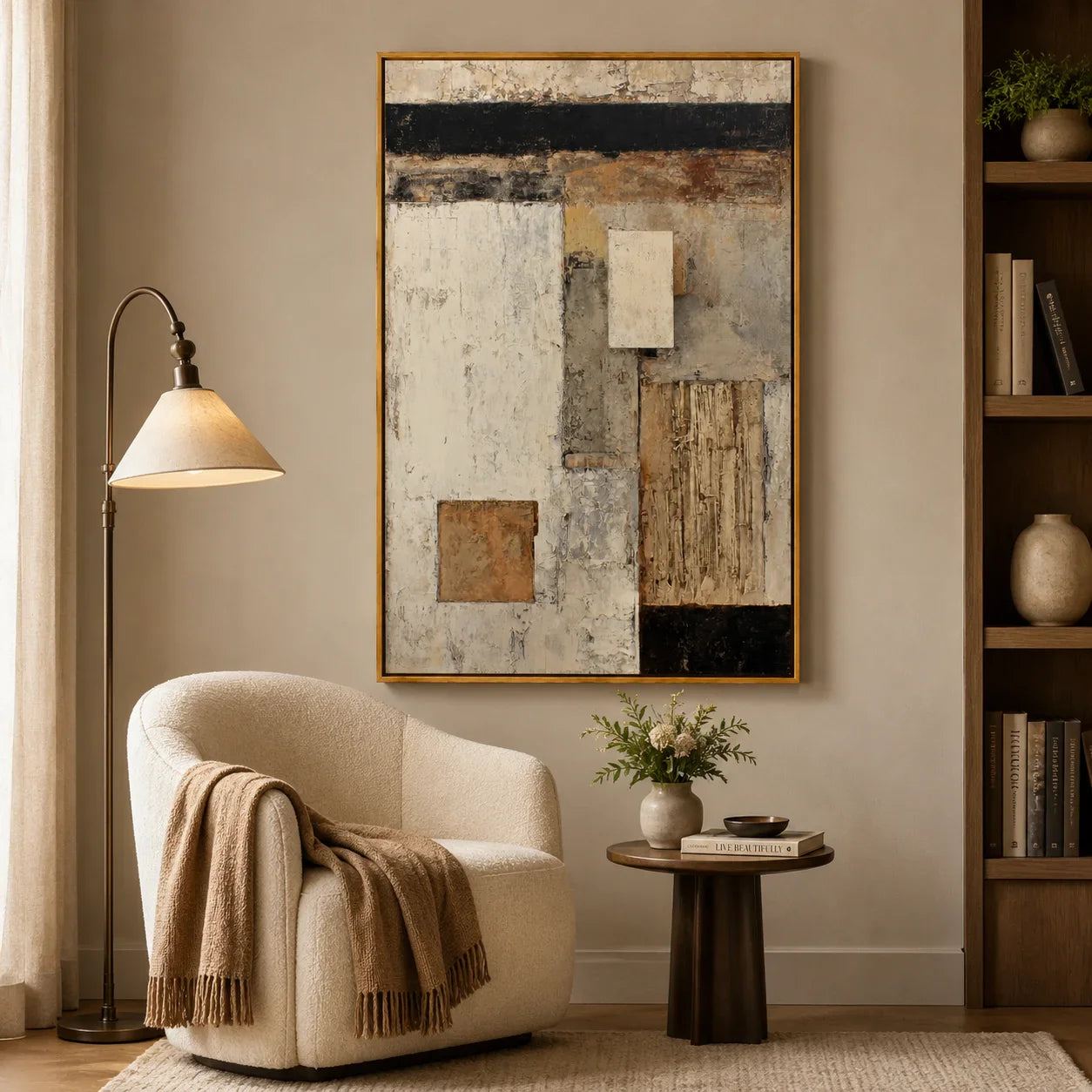
For narrow entryways, vertical paintings are usually a good choice. They add height and draw the eye upward. For wider entryways or console table areas, horizontal paintings can create a more balanced look.
If you have a console table, choose artwork that is proportionate to the table. The painting should generally be smaller than the table width, but large enough to feel intentional.
For tall walls, do not be afraid to choose a larger vertical piece. A small painting on a tall entryway wall can look lost.
Good entryway artwork choices include:
- Vertical abstract oil paintings
- Modern figure paintings
- Textured neutral wall art
- Bold black and white artwork
- Large statement canvas paintings
- Warm landscape paintings
The right artwork size can make the entryway feel designed rather than empty.
5. Wall Art for Hallways and Long Walls
Hallways can be challenging because they are often narrow and long. The artwork should guide the eye without making the space feel crowded.
For long hallways, you can use one large horizontal painting at the end of the hallway to create a focal point. You can also use a series of smaller paintings along the wall, but make sure they feel connected in style or color.
For narrow hallway walls, vertical artwork often works better than very wide pieces. Vertical paintings add height and elegance without taking up too much visual space.
If the hallway has a console table, bench, or wall lighting, choose artwork that connects with these elements.
Textured hand-painted paintings work especially well in hallways because lighting can bring out the surface details as people walk by.
6. Wall Art for Large Blank Walls
A large blank wall needs artwork with presence. Small wall decor can make the empty space feel even larger.
If you have a large wall in a living room, staircase area, dining room, loft, or open-plan space, consider choosing oversized canvas wall art. A single large painting often looks more luxurious and less cluttered than several small pieces.
Oversized artwork works well in:
- Open living rooms
- High-ceiling spaces
- Large dining rooms
- Stairway walls
- Hotel-style bedrooms
- Modern offices
- Luxury entryways
A large hand-painted painting can define the wall and create a strong focal point. It also allows the texture and brushstrokes to be seen clearly from a distance.
For large blank walls, bigger is often better.
7. Should You Choose One Large Painting or Several Small Ones?
Both options can work, but they create different effects.
One large painting usually feels cleaner, more modern, and more luxurious. It is ideal for minimalist interiors, modern homes, luxury living rooms, and statement walls.
Several smaller paintings can feel more casual, personal, or gallery-like. This can work well in hallways, staircases, creative spaces, and eclectic interiors.
For high-end home decor, one oversized hand-painted oil painting often creates the strongest impression. It gives the room a clear focal point and avoids visual clutter.
If your goal is a polished, designer-style look, one large artwork is usually the better choice.
8. How High Should You Hang Your Painting?
Size is important, but hanging height also matters.
A common rule is to hang artwork so that the center of the painting is around eye level. In many homes, this means the center is approximately 57 to 60 inches from the floor.
When hanging artwork above furniture, leave enough space between the furniture and the bottom of the painting. For sofas, beds, and sideboards, a gap of about 6 to 10 inches often looks natural.
If the painting is too high, it may feel disconnected from the furniture. If it is too low, it may feel crowded.
The artwork should feel visually connected to the furniture below it.
9. Why Oversized Hand-Painted Art Feels More Luxurious
Oversized artwork has a strong visual effect. It gives a room confidence, scale, and a curated feeling.
When the artwork is hand-painted, the effect becomes even stronger. The larger canvas allows real brushstrokes, paint layers, palette knife marks, and texture to stand out.
This is one reason large hand-painted oil paintings are popular in luxury interiors, hotel lobbies, designer homes, and high-end apartments. They do not just decorate a wall. They define the space.
A large painting can make simple furniture look more expensive. It can turn a plain wall into a focal point. It can make the entire room feel more finished.
For buyers who want a premium home decor result, oversized hand-painted wall art is one of the most effective choices.
10. Final Tips for Choosing the Right Size
Before choosing a painting, measure your wall and furniture. Do not rely only on product photos. A painting can look large online but feel small in your room.
Use painter’s tape to mark the artwork size on the wall before buying. This helps you see the real scale.
Think about the viewing distance. A painting in a large living room can be bigger because people will view it from farther away. A painting in a small hallway may need to be more compact.
Consider the mood of the space. Large artwork feels bold and luxurious. Medium artwork feels balanced and versatile. Smaller artwork works best in intimate corners or gallery arrangements.
Most importantly, choose a size that feels intentional.
Final Thoughts
Choosing the right wall art size can completely change the look and feeling of your room.
A painting that is too small may make the wall feel unfinished. A painting that is properly sized can create balance, structure, and elegance. For living rooms, bedrooms, dining rooms, entryways, and large blank walls, scale is one of the most important details.
A hand-painted oil painting brings even more value because it adds real texture, brushstrokes, and depth to the wall. When chosen in the right size, it can become the centerpiece of your home.
At Ownanart, every painting is created to bring warmth, texture, and timeless beauty into your space. Whether you are looking for a large painting above the sofa, a calming bedroom piece, or oversized canvas wall art for a blank wall, the right size can turn your wall into a statement.
The right artwork does not just fit your wall.
It completes your room.