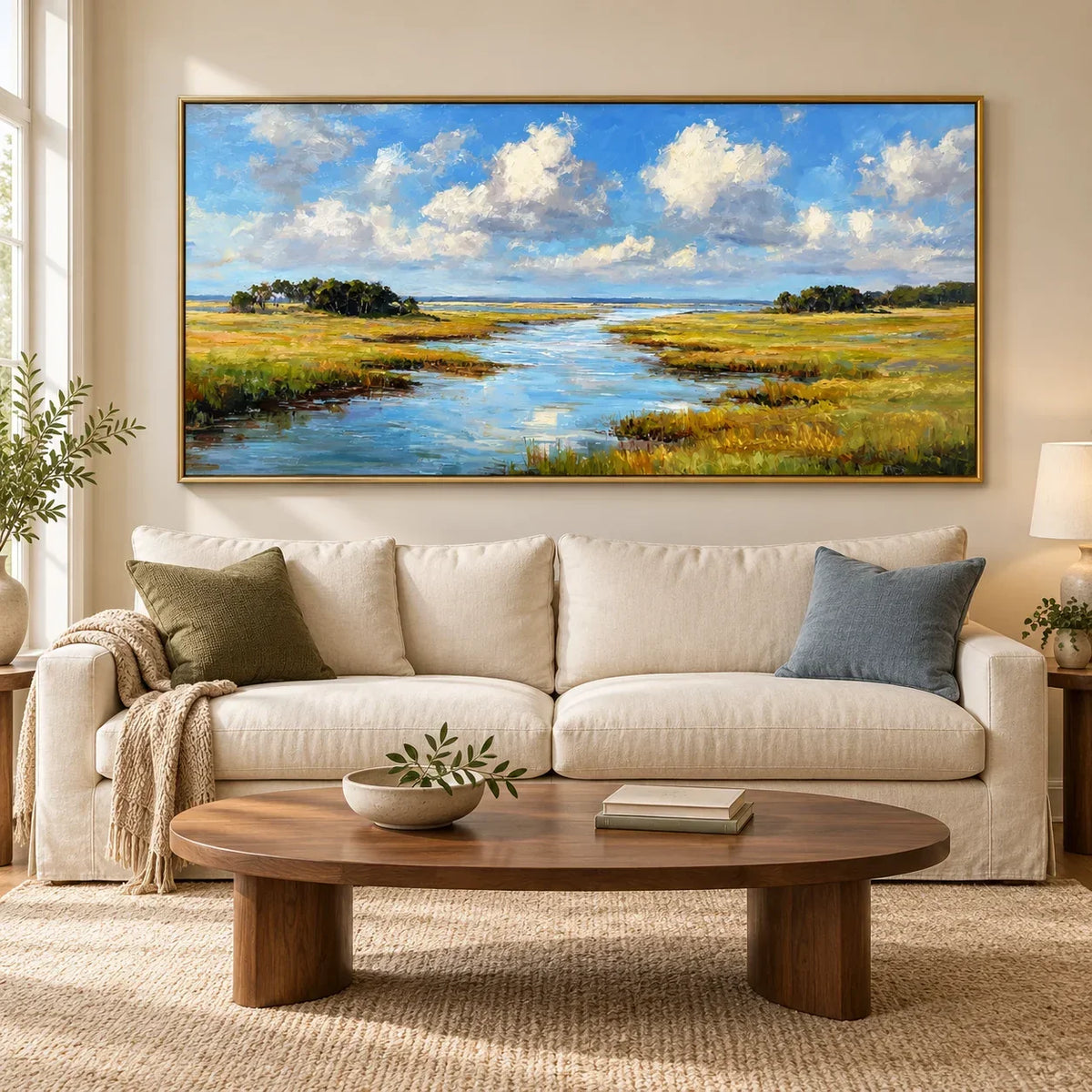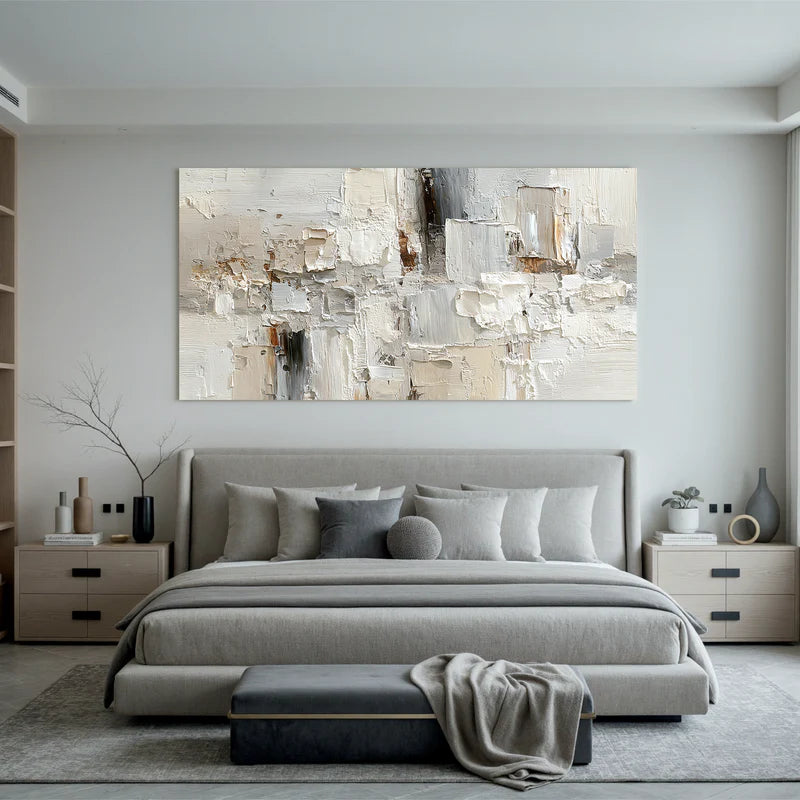

Framed vs Unframed Canvas Art: Which Should You Choose for Your Home?
You have found the right painting.
The colors work beautifully with your room. The dimensions fit the wall. The style feels right.
Then comes another decision:
Should you frame it or leave the canvas unframed?
Both options can look beautiful, but they create very different visual effects.
A framed oil painting often feels more finished, architectural, and substantial. An unframed canvas can feel cleaner, lighter, and more contemporary.
Neither option is automatically better.
The right choice depends on the artwork, room, furniture, canvas construction, budget, and overall interior style.
This guide compares framed vs unframed canvas art and explains when each option works best.
Quick Answer: Is Framed or Unframed Canvas Art Better?
Choose framed canvas art if you want the painting to feel more finished, substantial, defined, or luxurious.
Choose unframed stretched canvas if you prefer a clean, minimalist, contemporary appearance and the canvas edges are intended to remain visible.
A simple rule:
Framed = more defined and finished
Unframed = cleaner and more minimal
For modern hand-painted oil paintings, a thin floating frame often provides a balance between the two by visually defining the artwork while preserving the appearance of the canvas.
1. What Is Framed Canvas Art?
Framed canvas art is a canvas painting displayed inside an outer frame.
Unlike artwork on paper, canvas does not always require glass.
Depending on the artwork, frames may include:
- Floating frames
- Thin wood frames
- Black frames
- Walnut frames
- Natural wood frames
- Gold frames
- Traditional decorative frames
For contemporary paintings, floating frames are particularly popular.
They create a small visual gap between the canvas and frame, making the artwork appear to “float” inside it.
This gives the painting definition without covering much of the canvas.
2. What Is Unframed Canvas Art?
“Unframed canvas” can mean different things, so it is important to understand what you are buying.
A stretched unframed canvas has already been stretched over wooden stretcher bars and can often be hung directly on the wall.
A rolled canvas, by contrast, has not been stretched and normally needs to be stretched or framed locally before display.
This distinction is particularly important when buying large paintings online.
Always check whether “unframed” means:
stretched but without an outer decorative frame
or:
rolled and unstretched.
They are not the same product.
3. Does Canvas Art Need a Frame?
No. A properly prepared stretched canvas does not always need an external decorative frame.
Many contemporary paintings are intentionally displayed without one.
This works especially well with:
- Modern abstract art
- Minimalist paintings
- Textured wall art
- Large contemporary paintings
- Organic modern interiors
- Coastal interiors
However, adding a frame changes the visual presentation.
It can make the artwork feel more substantial and create a stronger boundary between the painting and wall.
So the question is not simply:
Does this canvas need a frame?
A better question is:
What presentation works best for this painting and this room?
4. Does Framed Wall Art Look More Expensive?
It can.
A well-chosen frame often makes artwork feel more finished because it creates a deliberate transition between the painting and surrounding architecture.
This can be particularly effective in high-end interiors.
Imagine a large neutral abstract painting on a warm beige wall.
Without a frame, it may feel soft and minimal.
Add a narrow dark walnut floating frame, and suddenly the edges become more defined. The dark wood may also connect visually with the room's coffee table, sideboard, or cabinetry.
The artwork now feels integrated with the interior.
However, an expensive-looking result depends on the quality and suitability of the frame, not simply whether a frame exists.
An inappropriate ornate frame can make a contemporary painting look less refined.
5. When Should You Choose Framed Canvas Art?
Framed canvas is a strong choice when you want:
- A finished presentation
- More visual definition
- A stronger focal point
- Additional edge protection
- A luxury interior appearance
- A connection between artwork and furniture
- More contrast against the wall
Frames are particularly useful when the artwork and wall have similar colors.
For example:
may have very little visual separation.
Adding a dark walnut or black floating frame creates a subtle boundary.
This can make neutral artwork stand out without changing the painting itself.
6. When Should You Choose Unframed Canvas Art?
Unframed stretched canvas works beautifully when you want:
- A minimalist look
- Clean edges
- Less visual weight
- A contemporary atmosphere
- The painting itself to remain the complete focus
- A softer relationship between artwork and wall
This is particularly effective with large paintings.
An oversized abstract canvas already has strong visual presence. Adding a heavy frame is not always necessary.
Unframed canvas can work especially well in:
- Minimalist homes
- Modern apartments
- Organic modern interiors
- Coastal homes
- Contemporary bedrooms
- Relaxed living rooms
The result often feels more casual and gallery-like.
7. What Is a Floating Frame?
A floating frame is designed so that the canvas sits inside the frame with a small visible gap around it.
This creates the illusion that the artwork is floating.
Unlike some traditional frames, a floating frame does not need to overlap the front edges of the painting significantly.
This makes it especially suitable for:
- Abstract paintings
- Textured oil paintings
- Impasto paintings
- Modern landscapes
- Large contemporary canvas art
It creates definition while preserving the artwork's full visual surface.
For many modern interiors, this is one of the most versatile framing options.
8. What Frame Color Should You Choose?
The frame should relate to both the painting and the room.
You do not necessarily need to match the dominant color of the artwork.
Instead, look at surrounding materials.
Black Frame
Works well with:
- Black accents
- Contemporary interiors
- White walls
- Black-and-white paintings
- Strong abstract compositions
Black frames create crisp definition.
Dark Walnut Frame
Works well with:
- Walnut furniture
- Beige interiors
- Earth-tone paintings
- Warm neutral rooms
- Organic modern decor
Walnut adds warmth without becoming overly decorative.
Natural Wood Frame
Works well with:
- Scandinavian interiors
- Coastal decor
- Light neutral homes
- Soft landscapes
- Organic modern spaces
Natural wood creates a relaxed effect.
Gold or Champagne Frame
Works well with:
- Traditional interiors
- Luxury decor
- Portraits
- Floral paintings
- Warm neutral artwork
For modern interiors, choose a thin or restrained metallic frame rather than an excessively ornate design.
9. Should the Frame Match Your Furniture?
It does not need to match exactly.
Instead, the frame should relate to the materials already in the room.
For example:
A room containing:
- Cream sofa
- Walnut coffee table
- Beige rug
- Brass floor lamp
could work beautifully with:
- Dark walnut frame
- Champagne frame
- Thin black frame
Each creates a different mood.
Exact matching can sometimes make an interior feel overly coordinated.
Subtle relationships usually feel more natural.
10. Should Abstract Paintings Be Framed?
Abstract paintings can look excellent either framed or unframed.
For highly textured abstract art, a floating frame is often a strong choice because it does not visually interfere with the surface texture.
For minimalist abstract paintings, unframed canvas can emphasize simplicity.
For neutral abstract art displayed against a similar wall color, a darker floating frame can provide helpful contrast.
Consider three things:
Artwork + wall + furniture
rather than choosing a frame based on the painting alone.
11. Should Textured or Impasto Paintings Be Framed?
Yes, they can be, but the frame should respect the dimensional surface of the artwork.
Impasto paintings contain raised paint and physical texture.
The presentation should avoid unnecessarily covering or pressing against these details.
Floating frames are particularly attractive for textured artwork because they create space around the canvas.
They also allow side lighting to reveal small shadows created by the raised paint.
For Ownanart-style hand-painted textured pieces, this can help emphasize one of the artwork's most important characteristics:
real physical texture rather than printed texture.
12. What Looks Best Above a Sofa: Framed or Unframed?
Both can work.
Choose framed artwork when the living room has:
- Strong architectural details
- Dark wood furniture
- Luxury styling
- Structured furniture
- A more formal atmosphere
Choose unframed canvas when the room has:
- Minimal furniture
- Soft neutral colors
- Relaxed styling
- Organic shapes
- Contemporary decor
For a large painting above a sofa, frame thickness matters.
An oversized artwork usually does not need a very heavy frame.
A thin floating frame can provide definition without making the entire composition feel visually heavy.
13. Framed vs Unframed Art for the Bedroom
Bedrooms often benefit from softer visual styling.
Unframed canvas can work particularly well above the bed because it feels simple and relaxed.
Consider:
- Neutral abstract paintings
- Soft landscapes
- Floral paintings
- Organic compositions
However, framed art can work beautifully when the bedroom contains stronger architectural or luxury details.
For example:
Cream bed + walnut nightstands + brass lighting + walnut-framed painting
creates a cohesive, sophisticated appearance.
14. Framed vs Unframed Art for the Entryway
Entryways often benefit from framed artwork.
Why?
Because the entryway creates the first impression of the home.
A frame can make the painting feel more intentional and finished.
A vertical painting above a console table with a narrow walnut or antique gold frame can immediately create visual structure.
This is especially effective when paired with:
- Console table
- Table lamp
- Ceramic vase
- Books
- Sculptural object
For a modern entryway, keep the frame narrow.
15. Framed vs Unframed Art for Large Walls
Large walls require visual scale.
For oversized artwork, both options can work—but consider visual weight.
A large painting already creates significant presence.
Adding a thick frame makes it feel even heavier.
This can be useful in:
- Large foyers
- Luxury living rooms
- Formal dining rooms
- High-ceiling spaces
In softer modern interiors, an oversized unframed canvas or thin floating frame may create better balance.
The larger the painting becomes, the more important frame proportion becomes.
16. Does a Frame Make the Artwork Larger?
Yes, physically and visually.
The final external dimensions of framed artwork will be larger than the canvas itself.
This matters when buying artwork for a specific wall.
For example, if your available wall space is limited, do not calculate fit using only the canvas dimensions.
Account for:
- Frame width
- Frame gap
- Nearby furniture
- Wall edges
- Lamps or sconces
This is especially important when purchasing oversized wall art.
17. Is Unframed Canvas Cheaper?
Usually, yes.
Frames add:
- Material cost
- Labor
- Packaging requirements
- Shipping weight
- Shipping volume
For very large paintings, these differences can become significant.
This is one reason some buyers choose rolled, unstretched artwork, particularly for international orders.
They can have the painting stretched and framed locally.
For customers purchasing very large artwork, this can provide more flexibility in both transportation and local framing choices.
18. Rolled vs Stretched Canvas: Which Is Better?
This is slightly different from framed vs unframed, but it is important for online art buyers.
Rolled Canvas
Best when:
- Shipping internationally
- Buying very large artwork
- You already have a local framer
- You want to choose your own stretcher depth
- You want maximum framing flexibility
The artwork will need professional stretching before display.
Stretched Canvas
Best when:
- You want artwork closer to ready-to-hang
- You do not want to arrange local stretching
- The painting size is manageable for shipping
A stretched canvas can then be displayed unframed or placed inside a decorative/floating frame.
19. Which Option Is Better for International Art Buyers?
For large international orders, rolled canvas can be practical.
Shipping a stretched and framed 60-inch painting requires significantly more packaging volume than shipping the canvas rolled.
Local framing also allows buyers to choose materials that match their existing interiors.
For example, a buyer may select a walnut frame that perfectly matches existing cabinetry.
However, buyers who prioritize convenience may prefer stretched and framed artwork when available.
There is no universal winner.
The right choice depends on:
size + destination + budget + convenience + interior preferences.
20. Framed vs Unframed Canvas: Quick Comparison
| Feature | Framed Canvas | Unframed Stretched Canvas |
|---|---|---|
| Appearance | Finished and defined | Clean and minimal |
| Visual weight | Stronger | Lighter |
| Modern interiors | Excellent with thin frames | Excellent |
| Luxury interiors | Excellent | Can work |
| Edge protection | More | Less |
| Cost | Usually higher | Usually lower |
| Shipping | Larger/heavier | Easier |
| Frame customization | Selected beforehand | Can be added later |
| Best for texture | Floating frame works well | Texture remains visually dominant |
| Ready to display | Usually yes | Usually yes if already stretched |
21. Which Should You Choose?
Ask yourself five questions.
1. What style is your home?
Minimalist → consider unframed.
Luxury contemporary → consider floating frame.
Traditional → consider framed.
Organic modern → walnut, natural wood, or unframed.
2. What color is the wall?
If the painting blends into the wall, a frame can create useful separation.
3. Is the painting already visually strong?
A dramatic oversized painting may not need additional visual weight.
4. Do you already have wood or metal accents?
The frame can connect the artwork with those materials.
5. Are you shipping a very large painting internationally?
Rolled canvas plus local stretching/framing may be worth considering.
FAQ: Framed vs Unframed Canvas Art
Is framed or unframed canvas art better?
Neither is universally better. Framed canvas feels more defined and finished, while unframed stretched canvas creates a cleaner, more minimalist appearance.
Do oil paintings need to be framed?
Not always. Many modern oil paintings on stretched canvas are displayed without decorative frames.
Can I hang a stretched canvas without a frame?
Yes, provided the artwork and hanging construction are intended for direct display.
Does framed wall art look more expensive?
A high-quality, appropriately chosen frame can make artwork feel more finished and substantial, but frame style and proportion matter.
What is the best frame for modern abstract art?
Thin floating frames in black, walnut, natural wood, or subtle metallic finishes are versatile options for modern abstract paintings.
Should neutral wall art have a frame?
It depends on the wall. If the painting and wall are similar in color, a darker or contrasting frame can help define the artwork.
Should a large canvas painting be framed?
It does not have to be. Oversized canvas already has strong visual presence, so either an unframed presentation or thin floating frame can work well.
What is the difference between unframed and rolled canvas?
An unframed stretched canvas is mounted on stretcher bars and may be ready to hang. Rolled canvas is unstretched and normally needs to be professionally stretched before display.
What frame color works with beige wall art?
Dark walnut, black, natural wood, champagne, and subtle gold can all work depending on the surrounding furniture and interior style.
Is rolled canvas good for international shipping?
It can be particularly practical for large paintings because it reduces shipping volume and allows the buyer to arrange stretching and framing locally.
Final Thoughts
Choosing between framed and unframed canvas art is not simply a question of which option looks more expensive.
It is about how you want the artwork to interact with the room.
A thin walnut floating frame can connect a painting with wooden furniture. A black frame can create definition against a white wall. A champagne frame can introduce subtle elegance. An unframed canvas can allow a large textured painting to feel clean, modern, and uninterrupted.
And for oversized international orders, rolled canvas can provide additional flexibility for local stretching and framing.
When choosing a 100% hand-painted oil painting, think about the entire composition:
painting + frame + wall + furniture + room.
At Ownanart, the goal is not simply to fill an empty wall. It is to help the artwork feel naturally connected to the space around it.
The frame should complement the art—not compete with it.